Why Small Pet Cages Smell — And the Two Things That Actually Change It
A small-pet cage that smells is usually treated as a cleaning failure. In most setups it is not. Odour in a cage is produced by ammonia from urine reacting with whatever is holding it, and by air that is not moving — which means the two things that change it are the material on the floor and the airflow around it. Cleaning frequency mostly controls how quickly you notice.
Our small-pets catalog runs $5.99 to $189.98, and the four products worth comparing for this problem sit between $14.95 and $109.99. One of them is bedding, one is a different bedding, one is not bedding at all, and the most expensive is the enclosure itself.
What follows is what those four listings state, compared on the two variables that matter. We did not keep a cage, and we are not going to describe keeping one.
Variable one: the beddings differ in one measurable way
Two of the four products are paper bedding, priced $14.95 and $17.99, and their listings are unusually specific in the same place — which makes them comparable. The cheaper one states odour control lasting 7–10 days and a 99.9% dust-free claim, with a 49-litre bag. The more expensive one states a low-dust claim, describes itself as virgin paper, and offers a 72-litre bag for $17.99.
Dust is the variable to compare first, not because it causes odour but because it determines whether the animal's respiratory system tolerates the bedding at all — and a paper bedding that is genuinely low-dust is the specific feature both listings compete on. Volume is the second: on bag size alone, $17.99 for 72 litres is the lower cost per litre of the two, before any difference in quality.
Note what neither listing states: an absorbency figure. Both claim effective odour control; neither gives a number to compare. That gap is why the 7–10 day figure on the cheaper listing is the only quantified claim in either description.
The third product is not bedding, and it is the one that changes the cage
The $18.99 item in this comparison is a metal hay rack, and its relevance is easy to miss. Its listing describes a solid metal frame that stands on its own without tipping, holds a large amount of hay, and clips tightly to wire enclosures.
Scattered hay is a large share of what makes a small-pet enclosure look and smell worse than it is: hay on the floor gets urinated on immediately, and once it is wet it is the substrate for the ammonia. A rack that holds hay up and out of the bedding removes that surface area. It is also the cheapest genuine change in this article, and the only one whose listing makes a structural claim you can check — standing on its own without tipping is a metal-gauge question, not a marketing one.
| Compare | 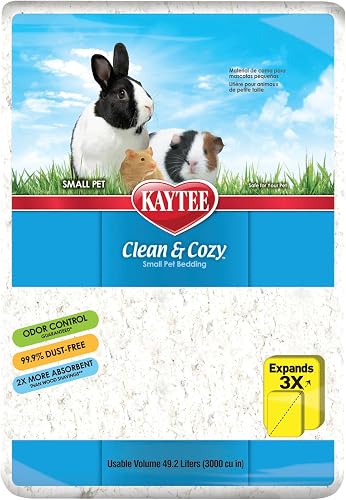 Kaytee Clean & Cozy Paper Bedding — 99.9% Dust-Free, 49 L Bag Kaytee Clean & Cozy Paper Bedding — 99.9% Dust-Free, 49 L Bag |  Oxbow Pure Comfort Paper Bedding — Low-Dust Virgin Paper, 72 Oxbow Pure Comfort Paper Bedding — Low-Dust Virgin Paper, 72 | 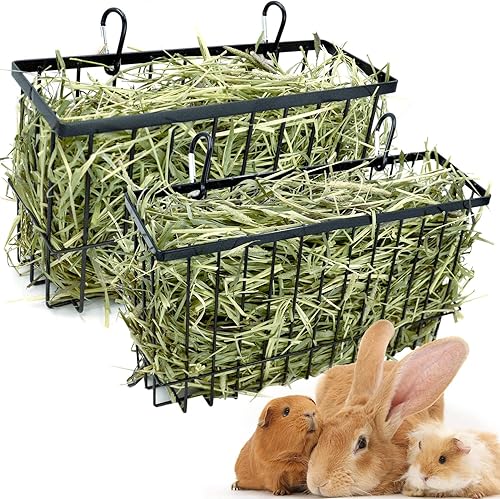 Metal Hay Rack with Heavy-Duty Clips — Freestanding, Fits Metal Hay Rack with Heavy-Duty Clips — Freestanding, Fits |
|---|---|---|---|
| Price | $14.95 | $17.99 | $18.99 |
| Discount | — | — | — |
| Rating | — | — | — |
| Brand | — | — | — |
| Buy | — | — | — |
Prices and availability are subject to change. Please check the merchant page before you buy.
Variable two: ventilation, which is where the money goes
The most expensive product here is a $109.99 two-story cage, and its listing does not sell itself on odour at all. It sells assembly, room to explore, a storage shelf underneath and casters — with the cage described as removable from the stand.
Read against the odour question, that last detail is the one that matters, and it is the reason this is worth including rather than dismissing as an upsell. A cage that lifts off its stand can be moved, and a cage that can be moved can be aired or placed where air moves. In bedding-based enclosures, airflow is the variable that controls ammonia concentration, and it is the one thing a bag of bedding cannot change. The $109.99 purchase here is not better bedding; it is an enclosure that makes ventilation and cleaning physically easier.
What these listings do not state
Two gaps run through the category. Neither bedding listing gives an absorbency figure, so the central claim of both — odour control — cannot be reduced to a number and compared. And none of the four states a replacement interval: the cheaper bedding quantifies its odour control as 7–10 days but not what happens at day eleven, and the cage listing gives no guidance on how much bedding depth is needed for its substrate to work. Those two numbers — litres needed and days per litre — are what would turn this from a judgement into an equation, and no listing in our catalog supplies them.
🛒 Ready to Shop?
All products featured in this guide are available on Amazon. Use the link below to start shopping for your pet — it supports our work at no extra cost to you.
Shop Pet Supplies on Amazon →🔥 Recommended Products